I have not written on my blog for several months. I have been busy, but truthfully, more self-absorbed than I care to admit. As I watch my children grow up and leave home, a sense of anxiety has crept in, and I wonder if I have done enough as their mother. I also worry endlessly about the soul-wrenching problems that they are either dealing with now or will deal with in the future. I have agonized over my inability to come up with ways to help and advice to give because let's face it, only God has the answers to some questions, and sometimes he only reveals enough to lift the burden a little so that we can learn whatever it is we need to learn.
Despite these feelings of inadequacy, today I realized that the most important advice I can give to my children and their children concerns the choice all of us have to make in this life. It is advice that I have always tried to relay in many different forms. To quote Elder Boyd K. Packer: ...the choice of life is not between fame and obscurity, nor is the choice between wealth and poverty. The choice is between good and evil. When we finally understand this lesson, thereafter our happiness will not be determined by material things. We may be happy without them or successful in spite of them.
In other words, if we spend too much of our energy and time trying to figure out how to be more popular, more beautiful, more wealthy, etc., we will miss the point of this life. On the other hand, we may also be wasting energy and time wishing we had some or all of these things, thinking that our happiness depends on it, yet despairing that our particular problems will keep us from achieving that happiness. What we forget is that our problems, our weaknesses, our thorn[s] in the flesh, according to Paul's description, are means to an end. They are part of the lessons of life, part of the test. Some are tested by poor health, some by a body that is deformed or homely. Others are tested by handsome and healthy bodies; some by the passion of youth; others by the erosions of age. Some suffer disappointment in marriage and family problems; others live in poverty and obscurity. Some (perhaps this is the hardest test) find ease and luxury. All are part of the test and there is more equality in this testing than sometimes we suspect (Boyd K. Packer). The trick is to choose good over evil despite the problems that plague us and to remember that our worth is not determined by renown or by what we we own (Boyd K. Packer).
We are taught in The Book of Mormon that men are instructed sufficiently that they know good from evil, and men are free according to the flesh; and all things are given them which are expedient unto man (2 Nephi 2:5, 27). What a hopeful statement for struggling mortals! Despite our problems, we have everything we need to succeed and make the right choice!
What are we free to choose? The Book of Mormon answers this question clearly. We have but two options, and all of life's choices, big and little will ultimately lead us to one of these. We are free to choose:
1. Liberty and eternal life, through the great Mediator of all men.
OR
2. Captivity and death, according to the captivity and power of the devil. (2 Nephi 2:27)
Our lives are made up of thousands of everyday choices. Over the years, these choices will be bundled together and show clearly what we value (Boyd K. Packer).
So I say to my children and grandchildren who will struggle with crises of identity and worth, who will wonder about what true success looks and feels like, who will feel like underdogs in a very competitive world: Be good. Study the gospel. Live it! Stay active in the Church. Receive the ordinances. Keep your covenants. I do not know at this moment whether you are learning, but I do know that what I am teaching is true (Boyd K. Packer).
To those who may think that their problems are too complex, too overwhelming to fall within the simplistic patterns described above, Elder Holland says:
I often think of those of you who are in the midst of a struggle. As much as we want life to be easy and comfortable, as much as I wish it could be that way for you, it simply cannot be. We are all, in one way or another, at one point in our lives, going to deal with a moral conundrum or a difficult issue without an easy answer.
At that point, we need to ask ourselves, "How much does the gospel of Jesus Christ really mean to me?" How will you act when that call comes? Will you defend Christ and His gospel, come what may?
John Taylor wrote that he once heard Joseph Smith say to the Quorum of the Twelve Apostles, "You will have all kinds of trials to pass through. God will feel after you, and He will take hold of you and wrench your very heart strings, and if you cannot stand it, you will not be fit for an inheritance in the Celestial Kingdom of God."
The life of Christ was like that. It is not coincidental that the word that is used for Christ's experience in Gethsemane is that He was in "agony." If we say we're disciples of Christ, we will on occasion be in agony. We must walk where he walked.
When those moments come--contemporary issues, historical complexities, personal problems at home, challenges in a mission or a marriage, wherever it is--I pray and ask and bless you to the end that you will be strong. May you follow Christ with every ounce of your being in good times and in bad.
Choose Christ.
Much of what I have written comes from an excellent talk called The Choice, given by Boyd K. Packer in the October, 1980 General Conference. I would encourage you to read and study it.
"The Choice" by Boyd K. Packer
My Family

About Me
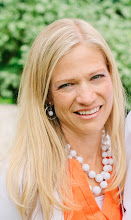
- Andrea Nelson
- I am a member of the Church of Jesus Christ of Latter-day Saints. I start this blog in an effort to pass on the legacy of light that I have been blessed with because of the gospel of Jesus Christ to my children and their children. I hope that others will benefit as well.
Friday, February 17, 2017

Friday, November 18, 2016
The Proof is in the Pudding
I just finished reading The Book of Mormon, Another Testament of Jesus Christ. This wasn't my first time through, nor will it be my last. The incredible insights and gems of wisdom I get from it change with each reading. This time, as I was finishing the last chapter and feeling the familiar stirrings of truth in my heart, these words popped into my head: The proof is in the pudding. I then referred back to a verse I had just read in Moroni, Chapter 10, Verse 6: And whatsoever thing is good is just and true; wherefore, nothing that is good denieth the Christ, but acknowledgeth that he is. Makes complete sense, right! I then looked up the pudding phrase. The Urban Dictionary says that the phrase is a shortened version of an older adage, The proof of the pudding is in the eating. In other words, if you want to know if something is good, eat it. Explore the evidence! If you do this with The Book of Mormon, you will find that it does lead inquiring souls to Christ, and it only makes sense that something that leads us to Christ is good.
During the summer of 1985, after my first year of college, I had the opportunity of participating in The Hill Cumorah Pageant in Palmyra, New York. This pageant portrays highlights from The Book of Mormon against the backdrop of the hill where the record was found by Joseph Smith, the translator of the book. Before the pageant would begin each night, the cast welcomed visitors and talked to them about the history of the book. For the most part, we were greeted kindly--sometimes with interest, sometimes not. However, one particular evening, we ran into a group of people who had not come to find the proof in the pudding but to discredit the pudding itself. We were told that we had been brainwashed into believing in The Book of Mormon from the time that we were young. They actually felt sorry for us and tried to convince us that we had been deceived. I asked them if they had read the book, and I was not surprised to hear that they had not. In fact, their minister had strongly advised against it, saying that the book was evil. In a spirit of love, I urged them to find out for themselves by reading it, but their minds were closed. I had read the book. I had prayed about it and knew of the true principles it contained. I felt like I was a better person for having read it. I had found the proof I needed to know that it was good pudding. However, I could not force someone to pick up the spoon and taste it. I felt disheartened and sad that something so dear to me was judged and sentenced before it was even put to the test.
I urge those of you who read this blog to pick up your spoons and taste this book with open minds and hearts. Put the promise at the end of the book to the test: And when ye shall receive these things, I would exhort you that ye would ask God, the Eternal father in the name of Christ, if these things are not true; and if ye shall ask with a sincere heart, with real intent, having faith in Christ, he will manifest the truth of it unto you by the power of the Holy Ghost (Moroni 10:4). Find out of the pudding is delicious by examining the evidence.
I testify that The Book of Mormon is the word of God. This book has shaped the course of my life for the better. How can a book that exhorts its readers to come unto Christ, and be perfected in him be anything but good? Don't take my word for it! Read it!
During the summer of 1985, after my first year of college, I had the opportunity of participating in The Hill Cumorah Pageant in Palmyra, New York. This pageant portrays highlights from The Book of Mormon against the backdrop of the hill where the record was found by Joseph Smith, the translator of the book. Before the pageant would begin each night, the cast welcomed visitors and talked to them about the history of the book. For the most part, we were greeted kindly--sometimes with interest, sometimes not. However, one particular evening, we ran into a group of people who had not come to find the proof in the pudding but to discredit the pudding itself. We were told that we had been brainwashed into believing in The Book of Mormon from the time that we were young. They actually felt sorry for us and tried to convince us that we had been deceived. I asked them if they had read the book, and I was not surprised to hear that they had not. In fact, their minister had strongly advised against it, saying that the book was evil. In a spirit of love, I urged them to find out for themselves by reading it, but their minds were closed. I had read the book. I had prayed about it and knew of the true principles it contained. I felt like I was a better person for having read it. I had found the proof I needed to know that it was good pudding. However, I could not force someone to pick up the spoon and taste it. I felt disheartened and sad that something so dear to me was judged and sentenced before it was even put to the test.
I urge those of you who read this blog to pick up your spoons and taste this book with open minds and hearts. Put the promise at the end of the book to the test: And when ye shall receive these things, I would exhort you that ye would ask God, the Eternal father in the name of Christ, if these things are not true; and if ye shall ask with a sincere heart, with real intent, having faith in Christ, he will manifest the truth of it unto you by the power of the Holy Ghost (Moroni 10:4). Find out of the pudding is delicious by examining the evidence.
I testify that The Book of Mormon is the word of God. This book has shaped the course of my life for the better. How can a book that exhorts its readers to come unto Christ, and be perfected in him be anything but good? Don't take my word for it! Read it!
Wednesday, October 5, 2016
"God Will Use You, God Will Bless You"
As I was working in the kitchen today, I turned on BYU TV and listened to an amazing talk by Elder Dean M. Davies, given at a BYU devotional in November, 2015. The talk is called God Will Use You, God Will Bless You. It is no coincidence that I turned on the TV at just the right moment to hear this talk. I attended the temple last night, praying that my children would be directed by the Lord in the decisions they are making in their lives. Some have expressed concern and confusion about making the big decisions that are looming on their horizons. This talk gives reassuring comfort and advice, reminding us that the Lord is at the helm and will guide us as long as we are striving to follow his commandments.
Here is the link: God Will Use You, God Will Bless You
Enjoy!
Here is the link: God Will Use You, God Will Bless You
Enjoy!
Sunday, September 18, 2016
Zero Fatalities
I was profoundly affected by the messages that I heard in our stake conference this weekend. In the Saturday evening meeting, our stake president, President Timothy Taylor, spoke on a topic that I have taken the liberty to call, "Zero Fatalities." I have also taken the license of mixing his words with mine. I hope he won't mind.
As a traffic engineer, he receives reports from the Utah Department of Transportation about the deaths on Utah roads. There have been over 200 deaths on the roads this year and of those, over 80 were the result of the victims not wearing a seat belt. UDOT's zero fatality goal emphasizes the question, "How many deaths are acceptable?" and in an even more personal way, "How many deaths are acceptable in your family?" Of course, the answer is an emphatic zero; hence, the "Zero Fatality" slogan.
The question that came into my mind as our president spoke was, "How many spiritual deaths are acceptable in my family?" To illustrate, he told the true story of a young man who wanted to spend the night at a friend's house. He called his parents for permission, but they wanted him to come home by his curfew of 12:00 am. When 12:15 rolled around and her son had not yet returned home, the mother became worried and started to drive the route that her son would have taken home. After driving for a few minutes, she saw a police car pass her with his lights on, and shortly after that, she came upon the scene of a horrible accident and saw the family car in the middle of a field. Her son had swerved to miss a deer and had rolled the car. Because he was not wearing his seat belt, he was ejected and the car rolled on top of him. Her wonderful son, who was known for always wearing his seat belt, had, for whatever reason, not put it on that night and had lost his life as a result. In his case and many others, it did not matter that he had worn his seat belt all of the previous times. What mattered was the decision to leave it off that night.
Like seat belts that keep us physically safe when we choose to wear them, we can develop small and simple habits that will keep us spiritually safe if we practice them--not sometimes, not most of the time, but always. Here is another rhetorical example that illustrates the importance of developing habits that maintain our spiritual health.
Eating is an "always" activity. Our bodies get hungry and we eat. What if we chose not to eat? Someone might ask us why we are looking so sickly and thin. We might answer, "Oh, I eat most of the time but sometimes I don't because I just don't have the time, and eating is so boring. It's just the same thing over and over again--put something in your mouth and chew it up." Of course, this answer is nonsensical. Yet, how often do we use these excuses for the spiritual essentials in our lives? Just like "most of the time" cannot and should not exist when it comes to "always" activities like eating and seat belts, it should not exist for things that contribute to our spiritual health.
Why, when we are crying out for peace in much the same way that our bodies cry out for food, why are we not ALWAYS doing the things that will bring us peace? Like eating and seat-belt wearing, the following spiritual essentials need to become fundamental habits: family home evening, family and personal prayer, family and personal scripture study, and regular temple attendance. As we do these things on a regular basis, we should remember that "always" is less about the quantity or the time we spend each day and more about the quality of how we do them. They should deepen our relationship with and understanding of our Heavenly Father and His son, Jesus Christ.
God is an "always" God and we must be "always" Saints--not "most of the time" Saints. If we are doing the small and simple spiritual essentials most of the time, then we will receive the help that we seek and need from God most of the time. I don't know about you, but I want and desperately need that help all of the time, as I seek to keep myself and those I love from becoming spiritual fatalities.
There is a great promise found in the Book of Mormon to those who always build their foundations on these small and simple essentials: And now, my sons, remember, remember that it is upon the rock of our Redeemer, who is Christ, the Son of God, that ye must build your foundation; that when the devil shall send forth his mighty winds, yea his shafts in the whirlwind, yea, when all his hail and his mighty storm shall beat upon you, it shall have no power over you to drag you down to the gulf of misery and endless wo, because of the rock upon which ye are built, which is a sure foundation, a foundation whereon if men build they cannot fall (Helaman 5:12).
As a traffic engineer, he receives reports from the Utah Department of Transportation about the deaths on Utah roads. There have been over 200 deaths on the roads this year and of those, over 80 were the result of the victims not wearing a seat belt. UDOT's zero fatality goal emphasizes the question, "How many deaths are acceptable?" and in an even more personal way, "How many deaths are acceptable in your family?" Of course, the answer is an emphatic zero; hence, the "Zero Fatality" slogan.
The question that came into my mind as our president spoke was, "How many spiritual deaths are acceptable in my family?" To illustrate, he told the true story of a young man who wanted to spend the night at a friend's house. He called his parents for permission, but they wanted him to come home by his curfew of 12:00 am. When 12:15 rolled around and her son had not yet returned home, the mother became worried and started to drive the route that her son would have taken home. After driving for a few minutes, she saw a police car pass her with his lights on, and shortly after that, she came upon the scene of a horrible accident and saw the family car in the middle of a field. Her son had swerved to miss a deer and had rolled the car. Because he was not wearing his seat belt, he was ejected and the car rolled on top of him. Her wonderful son, who was known for always wearing his seat belt, had, for whatever reason, not put it on that night and had lost his life as a result. In his case and many others, it did not matter that he had worn his seat belt all of the previous times. What mattered was the decision to leave it off that night.
Like seat belts that keep us physically safe when we choose to wear them, we can develop small and simple habits that will keep us spiritually safe if we practice them--not sometimes, not most of the time, but always. Here is another rhetorical example that illustrates the importance of developing habits that maintain our spiritual health.
Eating is an "always" activity. Our bodies get hungry and we eat. What if we chose not to eat? Someone might ask us why we are looking so sickly and thin. We might answer, "Oh, I eat most of the time but sometimes I don't because I just don't have the time, and eating is so boring. It's just the same thing over and over again--put something in your mouth and chew it up." Of course, this answer is nonsensical. Yet, how often do we use these excuses for the spiritual essentials in our lives? Just like "most of the time" cannot and should not exist when it comes to "always" activities like eating and seat belts, it should not exist for things that contribute to our spiritual health.
Why, when we are crying out for peace in much the same way that our bodies cry out for food, why are we not ALWAYS doing the things that will bring us peace? Like eating and seat-belt wearing, the following spiritual essentials need to become fundamental habits: family home evening, family and personal prayer, family and personal scripture study, and regular temple attendance. As we do these things on a regular basis, we should remember that "always" is less about the quantity or the time we spend each day and more about the quality of how we do them. They should deepen our relationship with and understanding of our Heavenly Father and His son, Jesus Christ.
God is an "always" God and we must be "always" Saints--not "most of the time" Saints. If we are doing the small and simple spiritual essentials most of the time, then we will receive the help that we seek and need from God most of the time. I don't know about you, but I want and desperately need that help all of the time, as I seek to keep myself and those I love from becoming spiritual fatalities.
There is a great promise found in the Book of Mormon to those who always build their foundations on these small and simple essentials: And now, my sons, remember, remember that it is upon the rock of our Redeemer, who is Christ, the Son of God, that ye must build your foundation; that when the devil shall send forth his mighty winds, yea his shafts in the whirlwind, yea, when all his hail and his mighty storm shall beat upon you, it shall have no power over you to drag you down to the gulf of misery and endless wo, because of the rock upon which ye are built, which is a sure foundation, a foundation whereon if men build they cannot fall (Helaman 5:12).
Friday, September 9, 2016
Only One Needful Thing
I have been so busy over the past month that I have neglected my blog, but today I came across a thought-provoking article by Patricia T. Holland that is a must-read for every woman. I thought about paraphrasing it and adding some words of my own in an effort to not cop out on writing today, but I cannot do justice to what she writes. Hopefully, the following paragraph from the article will tantalize you to read more:
We must have the courage to be imperfect while striving for perfection. We must not allow our own guilt, the feminist books, the talk-show hosts, or the whole media culture to sell us a bill of goods--or rather a bill of no goods. We can become so sidetracked in our compulsive search for identity and self-esteem that we really believe it can be found in having perfect figures or academic degrees or professional status or even absolute motherly success. Yet, in so searching externally, we can be torn from our true internal, eternal selves. We often worry so much about pleasing and performing for others that we lose our uniqueness--that full and relaxed acceptance of one's self as a person of worth and individuality. We become so frightened and insecure that we cannot be generous toward the diversity and individuality, and yes, problems of our neighbors. Too many women with these anxieties watch helplessly as their lives unravel from the very core that centers and sustains them. Too many are like a ship at sea without sail or rudder, "tossed to and fro," as the Apostle Paul said, until more and more of us are genuinely, rail-grabbingly seasick."
Click on this link to read the rest of the article:
"One Thing Needful": Becoming Women of Greater Faith in Christ
We must have the courage to be imperfect while striving for perfection. We must not allow our own guilt, the feminist books, the talk-show hosts, or the whole media culture to sell us a bill of goods--or rather a bill of no goods. We can become so sidetracked in our compulsive search for identity and self-esteem that we really believe it can be found in having perfect figures or academic degrees or professional status or even absolute motherly success. Yet, in so searching externally, we can be torn from our true internal, eternal selves. We often worry so much about pleasing and performing for others that we lose our uniqueness--that full and relaxed acceptance of one's self as a person of worth and individuality. We become so frightened and insecure that we cannot be generous toward the diversity and individuality, and yes, problems of our neighbors. Too many women with these anxieties watch helplessly as their lives unravel from the very core that centers and sustains them. Too many are like a ship at sea without sail or rudder, "tossed to and fro," as the Apostle Paul said, until more and more of us are genuinely, rail-grabbingly seasick."
Click on this link to read the rest of the article:
"One Thing Needful": Becoming Women of Greater Faith in Christ
Saturday, July 23, 2016
Small and Simple
. . . by small and simple things are great things brought to pass; and small means in many instances doth confound the wise (The Book of Mormon, Alma 37:6).
It is interesting to me that the smallest organisms created by God can cause the greatest damage to mankind--humans who are 100 times their size. Nature continues to teach me object lessons. I was "confounded" by one this week. A small, unnoticeable tick somehow bit me. I never knew I had a bite, but I became infected with a disease that has a high mortality rate should it go untreated. Luckily, man has created a way around these little buggers, and I was able to get on an antibiotic, which after 5 days of absolute misery is now treating the illness.
While it is a little disconcerting to me that lives can be changed by such small means, I also realize that if God created these small creatures with such great, albeit harmful potential, the potential of his noblest creation, mankind, must be exponentially greater. We have seen the realities of man's misuse of their capacity for greatness in more ways than one over the past several months, even days, but what about our capacity for good? What unharnessed, unacknowledged potential for good do we have inside us? What can we create that would change lives for the better?
In an address to women, Elder Dieter F. Uchtdorf said, The desire to create is one of the deepest yearnings of the human soul. No matter our talents, education, backgrounds, or abilities, we each have an inherent wish to create something that did not exist before. You might say, 'I'm not the creative type. When I sing, I'm always half a tone above or below the note. I cannot draw a line without a ruler. And the only practical use for my homemade bread is as a paperweight or as a doorstop.' If that is how you feel, think again, and remember that you are spirit daughters of the most creative Being in the universe.
So I say, even though we may feel small and simple, let's make great things happen! God created us to do just that.
It's amazing what you can learn from a tick!
Watch this beautiful 2 minute video:
Create
It is interesting to me that the smallest organisms created by God can cause the greatest damage to mankind--humans who are 100 times their size. Nature continues to teach me object lessons. I was "confounded" by one this week. A small, unnoticeable tick somehow bit me. I never knew I had a bite, but I became infected with a disease that has a high mortality rate should it go untreated. Luckily, man has created a way around these little buggers, and I was able to get on an antibiotic, which after 5 days of absolute misery is now treating the illness.
While it is a little disconcerting to me that lives can be changed by such small means, I also realize that if God created these small creatures with such great, albeit harmful potential, the potential of his noblest creation, mankind, must be exponentially greater. We have seen the realities of man's misuse of their capacity for greatness in more ways than one over the past several months, even days, but what about our capacity for good? What unharnessed, unacknowledged potential for good do we have inside us? What can we create that would change lives for the better?
In an address to women, Elder Dieter F. Uchtdorf said, The desire to create is one of the deepest yearnings of the human soul. No matter our talents, education, backgrounds, or abilities, we each have an inherent wish to create something that did not exist before. You might say, 'I'm not the creative type. When I sing, I'm always half a tone above or below the note. I cannot draw a line without a ruler. And the only practical use for my homemade bread is as a paperweight or as a doorstop.' If that is how you feel, think again, and remember that you are spirit daughters of the most creative Being in the universe.
So I say, even though we may feel small and simple, let's make great things happen! God created us to do just that.
It's amazing what you can learn from a tick!
Watch this beautiful 2 minute video:
Create
Sunday, July 10, 2016
Age 50 Rant
On June 18, I turned 50 years old. Suddenly, I look at myself in the mirror and think I look 50 years old. Suddenly, my body feels 50 years old. What is happening to me!?! I really didn't think it would be that big of a deal and on June 18, it wasn't! I had a blast playing with my family. My two out-of-state children surprised me by flying in for my birthday. It was an awesomely wonderful weekend, but now . . . I feel it. I really hope this is just a state of mind I can talk myself out of . . . SOON, but just in case, I have a doctor's appointment scheduled to see just how far the hormones have gone out of whack. I really think at 50, hormones should give us women a break. I mean REALLY, haven't they tortured us enough over the years . . . pregnancy hormones . . . baby blues . . . postpartum depression . . . premenopause . . . menopause . . . post menopause. COME ON! ENOUGH ALREADY! And just when you think acne is a thing of the past, it comes back and accentuates all the liver spots! By the way, will someone please explain why the word "men" shows up in "menopause"?! Shouldn't it be called "womenonpause"?! Because that is what it feels like . . . everything that used to make me feel like a women is on sabbatical . . . a very saggy, long sabbatical!
In all seriousness, my birthday was fantastic, and when I have time, I will post an awesome video recapping the wonderful time I spent with my family. Each of them wrote me beautiful letters and notes that meant so much. I will end with a quote my mom gave me:
Age 3: She looks at herself and sees a queen.
Age 8: She looks at herself and sees Cinderella.
Age 15: She looks at herself and sees an ugly duckling (Mom, I can't go to school looking like this today!).
Age 20: She looks at herself and sees "too fat/too thin, too short/too tall, too straight/too curly" but decides she's going out anyway.
Age 40: She looks at herself and sees "too fat/too thin, too short/too tall, too straight/too curly" but says, "At least I am clean," and goes out anyway.
Age 50: She looks at herself and says, "I am what I am," and goes wherever she wants to go.
Age 60: She looks at herself and reminds herself of all the people who can't even see themselves in the mirror anymore. Goes out and conquers the world.
Age 70: She looks at herself and sees wisdom, laughter, and ability and goes out and enjoys life.
Age 80: Doesn't bother to look. Just puts on a purple hat and goes out to have fun with the world.
The moral is, maybe we should all grab that purple hat a little earlier.
(Elder M. Russell Ballard)
I think I'm going to buy myself a new hat.
In all seriousness, my birthday was fantastic, and when I have time, I will post an awesome video recapping the wonderful time I spent with my family. Each of them wrote me beautiful letters and notes that meant so much. I will end with a quote my mom gave me:
Age 3: She looks at herself and sees a queen.
Age 8: She looks at herself and sees Cinderella.
Age 15: She looks at herself and sees an ugly duckling (Mom, I can't go to school looking like this today!).
Age 20: She looks at herself and sees "too fat/too thin, too short/too tall, too straight/too curly" but decides she's going out anyway.
Age 40: She looks at herself and sees "too fat/too thin, too short/too tall, too straight/too curly" but says, "At least I am clean," and goes out anyway.
Age 50: She looks at herself and says, "I am what I am," and goes wherever she wants to go.
Age 60: She looks at herself and reminds herself of all the people who can't even see themselves in the mirror anymore. Goes out and conquers the world.
Age 70: She looks at herself and sees wisdom, laughter, and ability and goes out and enjoys life.
Age 80: Doesn't bother to look. Just puts on a purple hat and goes out to have fun with the world.
The moral is, maybe we should all grab that purple hat a little earlier.
(Elder M. Russell Ballard)
I think I'm going to buy myself a new hat.
Subscribe to:
Posts (Atom)